Newsletter Subscribe
Enter your email address below and subscribe to our newsletter

 ByJohn A
The infrastructure built to handle discarded electronics was designed around a particular kind of object: a computer, a television, a phone, a printer. Those products defined the category for thirty years, and the collection systems, processing equipment, and regulations all reflect them.
That definition is now expanding rapidly, and the products arriving at the edges of it are considerably harder to handle. Solar panels reaching the end of a twenty-five year design life, vehicle battery packs weighing hundreds of kilograms, and a vast population of connected devices too small and too cheap to be worth processing individually all present problems the existing system was not built for.
Anticipating this matters because the volumes involved are large enough to change the shape of the e-waste environmental impact over the next two decades, and the infrastructure to deal with them is being built now or not at all.
Photovoltaic installation grew from a small base to enormous scale over roughly two decades, and panels have a design life of around twenty-five to thirty years. The consequence is arithmetic: the installations from the first large deployment wave are approaching retirement, and the volume will rise steeply rather than gradually.
Panels are difficult for specific reasons. They are large, heavy, and laminated, with glass bonded to cells and encapsulant in a structure designed explicitly to resist separation for decades outdoors.
The recoverable material is genuinely valuable. Silicon, silver in the cell contacts, aluminum framing, copper wiring, and the glass itself all have markets. Separating them economically is the unsolved part, since the lamination that makes a panel durable is precisely what makes it hard to take apart.
Dedicated panel recycling capacity exists but is limited relative to the volumes coming, and in many regions the default destination remains landfill because no alternative is available at accessible cost.
Electric vehicle batteries present the opposite problem: enormous value, significant hazard, and a genuine question about what should happen first.
A vehicle pack retired from automotive service typically retains a substantial fraction of its original capacity, which is inadequate for driving and entirely adequate for stationary storage. Second-life applications in grid support and building storage are being developed, and they defer recycling by another decade or more.
When recycling does occur, the materials are worth recovering. Lithium, cobalt, nickel, and manganese are all supply-constrained and all present in quantity.
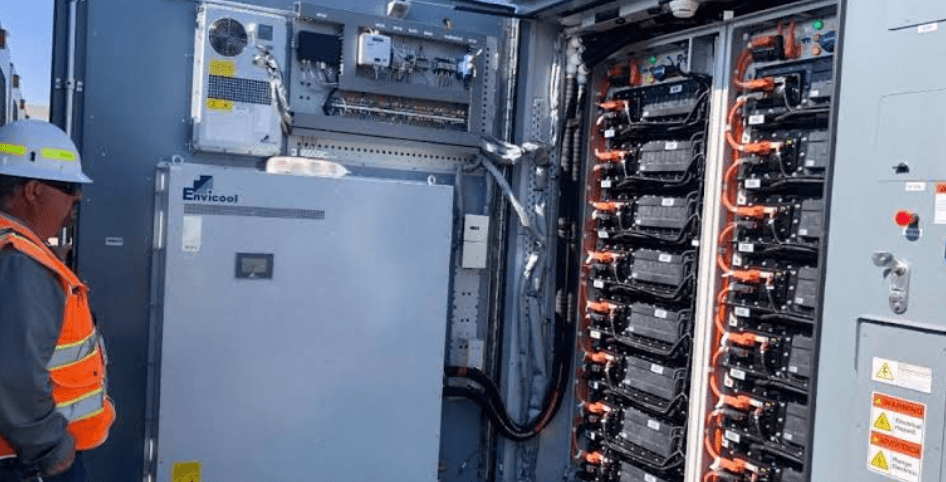
Handling is the constraint. Packs are heavy, they carry high voltage, and damaged cells present fire risk that is difficult to manage at scale. Transport is regulated accordingly, and processing requires purpose-built facilities rather than adapted ones.
The infrastructure is developing quickly because the material value justifies investment, which distinguishes this category from panels.
The most awkward category is the one made up of objects nobody thinks of as electronics.
Smart bulbs, sensors, trackers, connected plugs, wearables, disposable vapes, greeting cards that play music, and children’s toys with embedded electronics all contain circuit boards and frequently contain batteries. Individually they are trivial. Collectively they represent an enormous number of units.
They are difficult for three reasons. They are small, so collection systems miss them and consumers discard them with general waste. They are cheap, so no economic incentive exists to process them individually. And many contain sealed lithium cells that cannot be removed without destroying the device, which makes them a fire risk in every waste stream they enter.
Single-use vaping devices are the clearest illustration. They contain a lithium cell and a circuit board, they are used once, they are discarded in enormous quantities, and they are almost never collected properly.
This category is growing faster than any other and has the weakest infrastructure behind it.
The common thread across all three is that the products were designed without their end of life in view, and the systems to handle them are being built after the fact.
The lesson from the first generation of electronic waste is that retrofitting is slow and expensive. Collection systems took decades to develop, and recovery rates remain modest.
Design requirements are the most effective intervention and they have to arrive before the products do. Requirements for panel recyclability, battery labelling and removability, and restrictions on embedded non-removable cells in disposable products all shape what arrives at facilities twenty years later.
Producer responsibility frameworks are extending to cover these categories in several jurisdictions, which is what funds the collection infrastructure.
For individuals, the practical actions are modest but real: keep small connected devices out of general waste, treat anything with an embedded battery as requiring a collection point, and be sceptical of disposable products with cells inside them.