Newsletter Subscribe
Enter your email address below and subscribe to our newsletter

 ByJohn A
Good sauna and cold-plunge guidance around this sauna accessories & heaters guide should sound like someone has actually installed and used the setup. Space, power, drainage, heat-up time, and routine all matter.
A buddy of mine, Dave, a contractor out of Duluth, called me last February about an indoor sauna install that had gone sideways. His client had bought a beautiful 6×7 hemlock cabin kit online, hired a handyman to wire the heater into a 120V outlet with an adapter, and skipped the permit. By the time Dave got there, the heater was tripping the breaker every 15 minutes, there was no ventilation to speak of, and the floor joists underneath were already showing moisture damage. The kit itself was perfectly fine. The install was the disaster.
That story captures something I see constantly. People shop for saunas like they shop for furniture. They compare the unit, maybe the wood species, click buy. But an indoor sauna is not a piece of furniture. It’s a small construction project with a real electrical component, and the difference between a daily-use wellness investment and an expensive closet comes down to three or four decisions you make before the kit even arrives.
Here is the practical read: most home indoor sauna builds land between $2,490 and $16,980 depending on size, wood, and heater class. The unit is maybe 60% of that number. The rest is pad prep, a dedicated 240V electrical run, permitting, and accessories. Get those right and you’ll use the thing every day. Skip them and you’ll resent the purchase within a year.
Spec sheets are where indoor sauna buyers get tripped up most often. Here’s what actually matters.
Cabin sizes range from compact 3×4 single-person units to 6×7 four-person rooms. The temptation is to go big. Resist it unless you genuinely have the square footage to spare and the panel capacity for a larger heater. A 3×4 with a quality 4.5 kW heater serves a single user or a couple beautifully, heats fast, and costs far less to run.
Match the heater to the cabin volume. This sounds obvious but people ignore it constantly. Undersized heaters run nonstop and burn out early. Oversized heaters cycle aggressively and waste electricity. Every reputable manufacturer publishes a sizing chart. Use it. Don’t trust a forum post from 2019.
Wood species matters more than most buyers realize. Pre-cut tongue-and-groove cladding in western red cedar, hemlock, thermo-aspen, or redwood is the standard for good reason: tight joinery holds heat and ages gracefully. Cheap kits sometimes substitute butt joints with felt backing. Those builds leak heat at the seams and look worn out within two seasons. If the listing doesn’t specify tongue-and-groove, ask. If they dodge the question, walk.
Door hardware, vapor barriers, bench construction: these details feel minor until they aren’t. A glass door with a proper magnetic seal versus a wooden door with a rubber gasket is a real quality-of-life difference at 185°F.
A pre-cut kit is genuinely a weekend project for two adults with basic tools. The carpentry side is manageable. The electrical side is not.
A typical traditional sauna heater pulls 4.5 to 9 kW on a dedicated 240V circuit at 30 to 50 amps. That’s serious current. A licensed electrician should run the circuit, pull the permit, and tie into your main panel. This is not a place to save money. Improperly wired sauna heaters are how house fires start, full stop.
Budget $600 to $1,800 for the electrical run depending on distance from your panel and local labor rates. If your panel is already near capacity (common in older homes), you may need a subpanel upgrade. Find that out before you order the kit.
Ventilation is the second thing people forget. Indoor installations need an intake vent near the heater and an adjustable exhaust on the opposite wall, near the ceiling. For interior rooms, that usually means ducting to the outside or connecting to a properly sized exhaust fan. Without airflow, you get stale air, inconsistent heat, and moisture problems in surrounding walls.
One more: permitting. Some counties exempt detached structures under 200 square feet from building permits. But the electrical permit for a 240V circuit is almost always required regardless. Call your local building department. It takes five minutes and can save you a compliance headache later.
I get asked constantly whether sauna use is “really” good for you or just a wellness trend. The honest answer: the evidence for traditional sauna use is stronger than most people expect.
The landmark study is Laukkanen et al., published in JAMA Internal Medicine in 2015. The research team followed 2,315 middle-aged Finnish men for 20 years and found a dose-response relationship between sauna frequency and reduced cardiovascular mortality. Men who used a sauna 4 to 7 times per week had roughly half the cardiovascular mortality of those who used one just once a week. That’s a striking finding, even accounting for the usual caveats about observational data and Finnish lifestyle factors.
A 2018 follow-up from the same group, published in BMC Medicine, reported lower dementia incidence at the highest sauna frequencies. The proposed mechanisms include heat acclimation, improved endothelial function, and a heart-rate response that mimics moderate-intensity exercise.
For practical purposes: 20-minute sessions at 170°F to 195°F, two to four times per week, is a reasonable starting protocol. Hydrate before and after. Get out if you feel lightheaded. Build up gradually. This is not a competition.
And the important caveat: anyone with a cardiac history, uncontrolled blood pressure, arrhythmia, Raynaud’s phenomenon, or who is pregnant should talk to a physician before starting. The research is encouraging for healthy adults, but a 10-minute conversation with your doctor is always the right first step.
The sticker price of the sauna kit is the number everyone fixates on. It’s also the wrong number. Here’s what a realistic all-in budget looks like.
Sauna unit: $2,490 for an entry-level barrel kit, $6,000 to $10,000 for a mid-tier cabin with a quality heater, $12,000 to $16,980 for a panoramic glass-front or premium thermo-aspen build.
Pad: $400 to $900 for a 4-inch compacted gravel pad with drainage (fine for barrel units on flat ground). $1,200 to $2,400 for a 4-inch reinforced concrete slab, roughly $4 to $7 per square foot installed. Concrete is the right call in cold or wet climates, and for any cabin-style unit.
Electrical: $600 to $1,800 for a dedicated 240V run by a licensed electrician with permit.
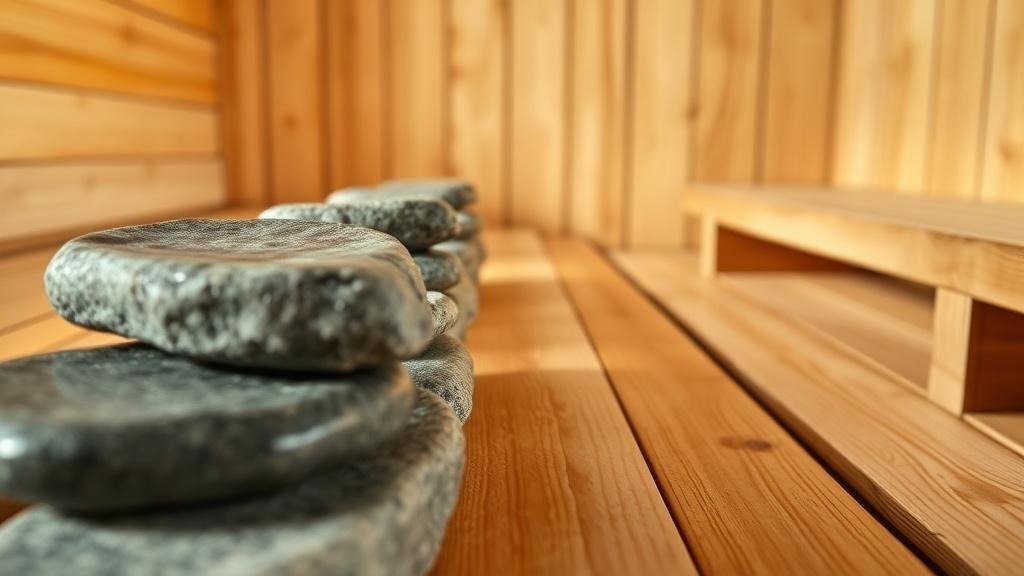
Accessories and first-year maintenance: Budget a few hundred for a quality bucket and ladle, thermometer/hygrometer, sauna stones, and bench towels.
So a realistic mid-range indoor cabin project runs about $8,000 to $13,000 all in. That’s real money. But compared to a gym sauna membership at $80 to $150 per month, the break-even point is surprisingly fast if you actually use it regularly.
On the resale question: appraisers won’t add dollar-for-dollar value for a sauna installation. But well-built wellness setups are treated as selling features in Northeast and Pacific Northwest markets especially. Think of it like a quality deck: it won’t appraise at cost, but it makes your listing more attractive.
As for HSA or FSA eligibility, a residential sauna is rarely reimbursable unless a clinician issues a Letter of Medical Necessity for a documented condition. This is patient-specific. Talk to your tax advisor before assuming it qualifies.
The tradeoffs here come down to footprint, install complexity, heat character, and which routine you’ll actually stick with.
An outdoor barrel sauna heats in 25 to 35 minutes, lives on a small pad, and keeps moisture and heat out of your living space. An indoor cabin heats a bit faster and offers the convenience of not walking outside in January, but requires proper ventilation and takes up room. An infrared cabin runs at lower temperatures (120°F to 150°F), plugs into a standard 120V outlet, and appeals to people who find traditional heat overwhelming. But the physiological response is different. The Laukkanen research was conducted on traditional Finnish saunas, not infrared.
My honest take: if you have any reasonable outdoor space and you live in a climate with real seasons, an outdoor barrel or cabin sauna is the best value in home wellness right now. The indoor route makes more sense for apartments, condos, or homes where outdoor space is truly limited.
For a longer comparison of specific models, heater wattages, and sizing considerations, see this sauna accessories & heaters guide. It’s a solid reference page worth bookmarking before you start pricing out builds.
Most of the sauna project is manageable for a competent homeowner. But there are three specific points where spending money on a professional saves you money (or worse) down the line.
The electrical run. Every time. No exceptions. A licensed electrician pulls the permit, sizes the breaker correctly, and ensures a safe tie-in to your panel. This is the one line item you never cut.
The pad, in tricky conditions. If you’re building on soft soil, in a freeze-thaw climate, or on a slope, get a contractor or experienced handyman involved. A pad that settles or cracks after the unit is sitting on it is exponentially more expensive to fix.
A physician, before you start. If you have any cardiac condition, blood pressure issues, Raynaud’s, are pregnant, or manage a chronic condition, get medical clearance first. The boring truth is that a brief conversation with your doctor is the single most valuable step in the entire project for your long-term health.
Yes. Traditional saunas are designed to perform in cold weather (they’re Finnish, after all). In below-freezing conditions, allow extra pre-heat time. If you’re also running a cold plunge with an integrated chiller, verify the chiller’s operating range covers your lowest ambient temperatures.
A well-built cedar or thermo-aspen sauna lasts 15 to 25 years with light annual care. Heaters are usually replaced once during that span. Budget for a heater swap around the 8 to 12 year mark.
Some municipalities exempt detached structures under 200 square feet from building permits. The electrical permit for a 240V circuit is almost always required. Call your local building department before ordering.
A 6 kW barrel sauna reaches 170°F in 25 to 35 minutes. A 7.5 kW cabin sauna lands at the same temperature in 30 to 45 minutes. Insulation quality, ambient temperature, and ventilation setup all affect these numbers.
Most adults settle into 12 to 20 minutes per session at 170°F to 195°F. If you’re new to sauna use, start at the lower end and build up over a few weeks. Hydrate before and after every session.
Disclaimer. This article is general consumer information, not medical advice. Heat and cold therapies carry real cardiovascular load. Anyone with arrhythmias, uncontrolled hypertension, Raynaud’s phenomenon, recent cardiac events, or who is pregnant should consult a physician before starting any new sauna or cold-plunge routine.
Any 240V electrical work should be completed by a licensed electrician under the appropriate local permit.
HSA and FSA reimbursement on wellness equipment is patient-specific and depends on a Letter of Medical Necessity from a clinician. Talk to your tax advisor before assuming a purchase qualifies.